
Most Americans grow up learning that our national traditions began with a cold winter in Plymouth or a feast in early Virginia. But if you walk the hills of Tallahassee near Apalachee Parkway, you are standing on the ground where the American holiday tradition actually began. In the winter of 1539, nearly a century before the Pilgrims, a massive Spanish expedition and a defiant Native American nation shared a tense, historic winter that gave birth to the first recorded Christmas on what is now United States soil.
The Arrival at Anhaica
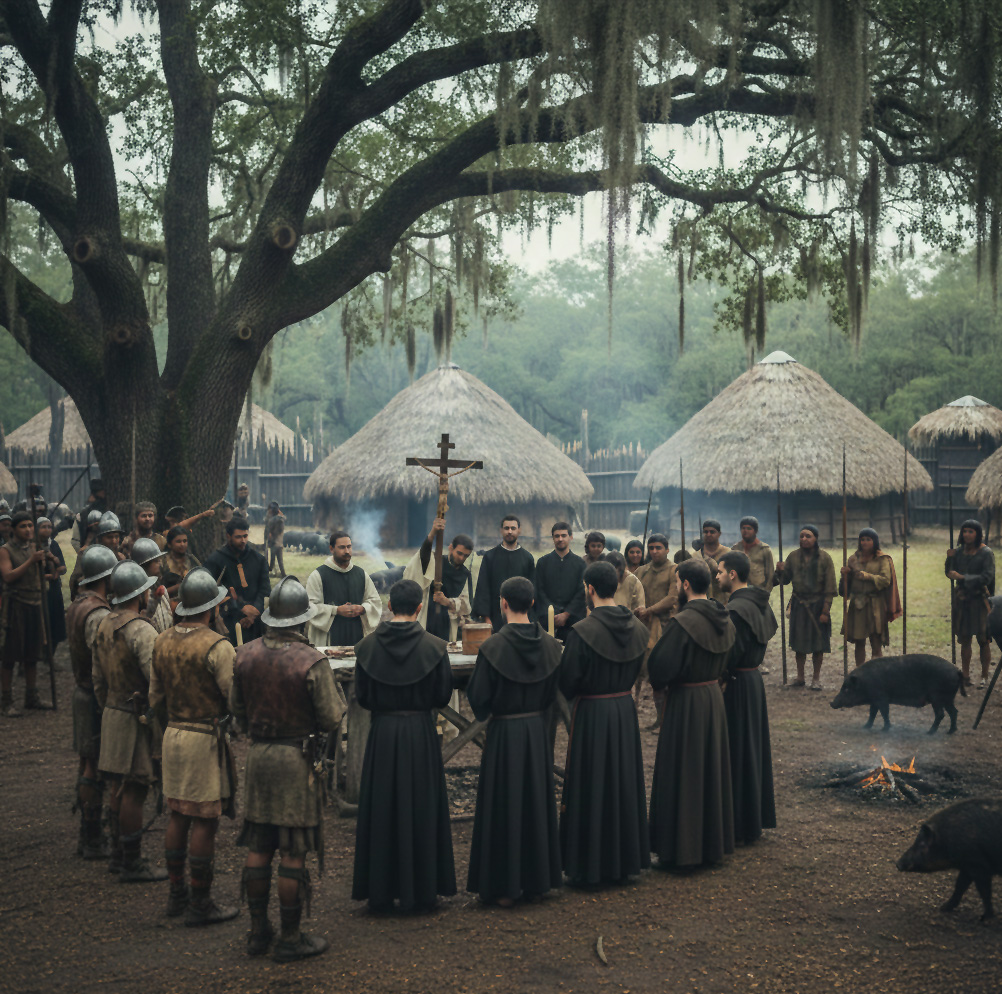
In October 1539, Spanish explorer Hernando de Soto arrived in the Tallahassee area. He brought with him over 600 soldiers, hundreds of horses, a herd of pigs, and, most importantly for this story, at least 12 Catholic priests.
They were looking for the capital of the Apalachee people, a province known for its fierce warriors and fertile fields. They found it at Anhaica, a sprawling village of 250 buildings located in the heart of modern-day Tallahassee. De Soto didn't ask for lodging; he took the village by force, turning the Apalachee's homes into a fortified Spanish winter camp.
To understand why Hernando de Soto was in Tallahassee, you have to look at the high-stakes, "all-in" nature of Spanish exploration during the Age of Discovery. De Soto wasn't just a traveler; he was a man fueled by ambition and a desperate need to outdo his rivals.
The Background: Ambition and Rivalry
By the time de Soto set his sights on Florida, he was already an incredibly wealthy man. He had played a key role in Francisco Pizarro's conquest of the Inca Empire in Peru, where he had seen firsthand the staggering amounts of gold and silver that a successful expedition could yield. However, de Soto didn't want to be a second-in-command; he wanted his own kingdom.
He petitioned King Charles V of Spain for the right to "conquer, pacify, and people" the southeastern United States (then known as La Florida). The King granted him the title of Adelantado, which essentially made him the military governor of any lands he could successfully seize. De Soto spent his entire fortune, and the fortunes of several others, to fund a private army of over 600 men, hundreds of horses, and specialized equipment. It was a massive financial gamble; if he didn't find "the next Peru," he would be bankrupt.
Why Tallahassee?
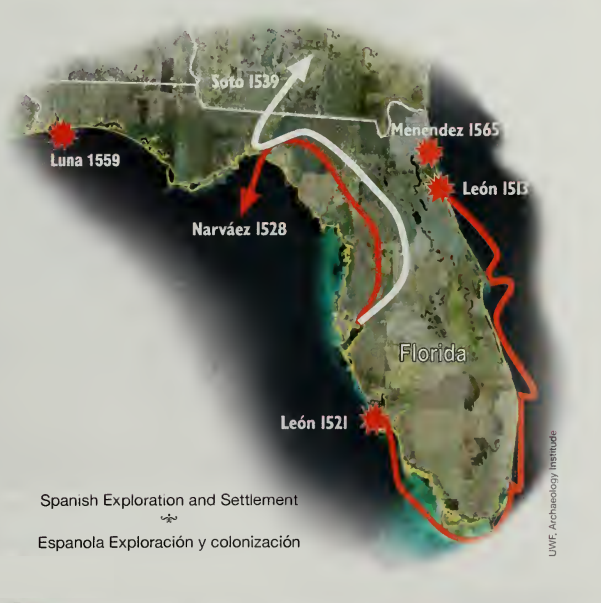
After landing in Tampa Bay in May 1539, de Soto began a brutal march north. He wasn't wandering aimlessly; he was following rumors of wealth and searching for a location with two specific qualities:
Sustainable Food Sources: An army of 600 men and hundreds of animals cannot carry enough food for a winter. They needed a territory with massive agricultural stores.
Strategic Security: They needed a centralized capital that they could fortify against the weather and hostile groups.
The Apalachee Province (modern-day Tallahassee) was legendary among Native American groups as a land of "eternal spring" and immense agricultural wealth. Earlier explorers, such as Pánfilo de Narváez in 1528, had reported on the Apalachee's vast fields of maize and their large, well-organized towns.
For de Soto, Tallahassee was the ultimate "winter prize." It offered the best chance to keep his army fed and alive during the months when travel was impossible. He arrived at Anhaica (near the present-day Myers Park neighborhood) in October 1539 and immediately realized the rumors were true. The area was so rich in corn, beans, and squash that his army could live off the Apalachee's labor for months.
This strategic choice to hunker down in Tallahassee is precisely why the first Christmas took place here. Had the land been less fertile or the Apalachee less organized, de Soto likely would have kept moving, and the first holiday Mass likely would have happened somewhere else.
A Christmas Under Siege
For 16th-century Spaniards, Christmas was not optional. In the Catholic tradition of the time, the Feast of the Nativity required a solemn High Mass. With a dozen priests on hand and a winter camp established, the observance of Christmas was a certainty.
However, the "First Christmas" was a far cry from the festive scenes we see today. The Spaniards were essentially under siege. The Apalachee were master archers and launched constant, deadly guerrilla raids on the camp. Historical accounts describe Spanish soldiers being picked off if they strayed even a few hundred yards from the village to gather firewood.
The feast itself was a unique fusion of old and new worlds. While the Spaniards had their pigs, they were largely dependent on the Apalachee's stores of dried maize, beans, and squash. This was the first time the flavors of the Florida panhandle and the traditions of Europe met during the winter solstice.
The 1987 Discovery: A Race Against Development
For hundreds of years, the exact location of Anhaica remained a "lost city." Many historians thought it was further north or west. That changed in 1987 thanks to a stroke of luck and the sharp eyes of state archaeologist B. Calvin Jones.
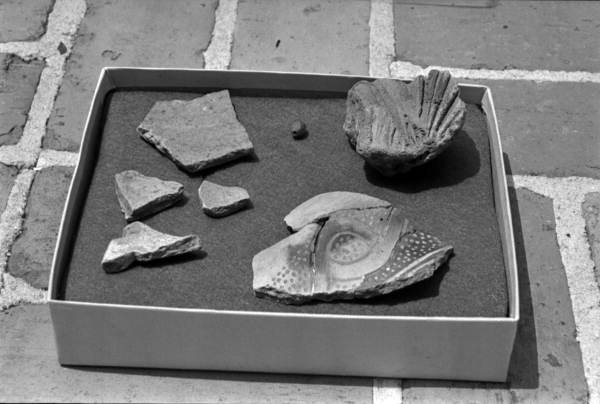
While driving past a construction site near the Governor's Mansion, land being cleared for a new office complex, Jones spotted Spanish pottery shards in the red clay. He managed to convince the developer to give him a few weeks to dig. What he found changed Tallahassee's history forever:
- Chainmail and Armor: Excavators found links from Spanish iron shirts.
- Early Currency: Copper coins known as maravedis, minted in Spain specifically for the New World.
- The Pig Teeth: Because pigs were not native to the Americas, finding 16th-century pig teeth in a Native American village was the "smoking gun" that proved de Soto's herd had been there.
The community rallied to save the site. In a rare preservation victory, the State of Florida purchased the property, ensuring that the spot where Christmas began would never be buried under an office building.
Why This Matters for Tallahassee
For Tallahasseeans, this isn't just a fun fact for a trivia night; it's a foundational part of the city's identity. The De Soto site is the only place in the entire United States where physical, archaeological evidence of the de Soto expedition has been found in its original context.
While other cities might claim older settlements, Tallahassee has the artifacts to prove it was the site of the first Christmas. It serves as a reminder that Florida's history is deeper and more complex than the "pioneer" narratives of the north. It is a story of collision between the powerful Apalachee nation and the Spanish Empire, occurring right in our own backyards.
Visiting the Ground Where It Happened
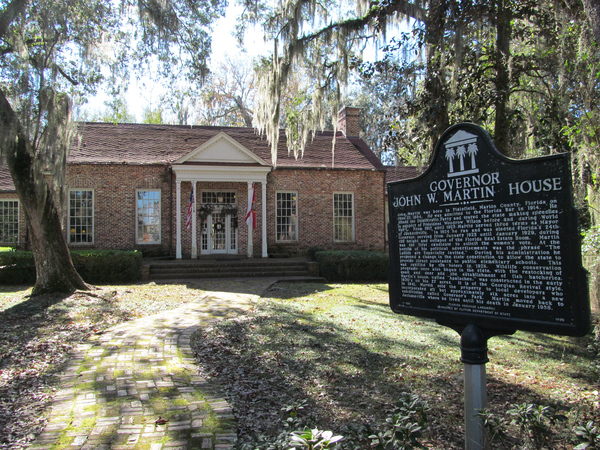
Today, you can visit the De Soto Site Historic State Park at 1001 De Soto Park Drive. It is a quiet, shaded park that feels worlds away from the nearby bustle of the Capitol.
- The Marker: Look for the Florida Heritage Landmark titled "The First Christmas."
- The Martin House: The park is also home to the historic 1930s home of Governor John W. Martin, which sits atop the archaeological site.
- Mission San Luis: To see how the Spanish-Apalachee relationship evolved a century later, a visit to the living history museum at Mission San Luis provides the perfect bookend to the de Soto story.
Comments
Join the conversation
Sign in or create an account to share your thoughts